6 Benefits of Concrete Pitless Weighbridges
Introduction
You’re evaluating weighbridge options, and the choice between steel and concrete platforms matters more than most vendors admit. Concrete pitless weighbridges deliver measurable advantages in installation speed, operating costs, and structural longevity—but these benefits only materialize when you understand the technical realities behind material performance, load distribution mechanics, and long-term maintenance patterns. This guide examines six concrete advantages that impact your bottom line: faster setup timelines, superior durability, reduced upkeep expenses, enhanced load handling, operational flexibility, and safety improvements. You’ll see why concrete platforms outlast steel alternatives and how pitless design eliminates common failure points.
Benefit 1: Faster and Easier Installation
No Deep Excavation Required
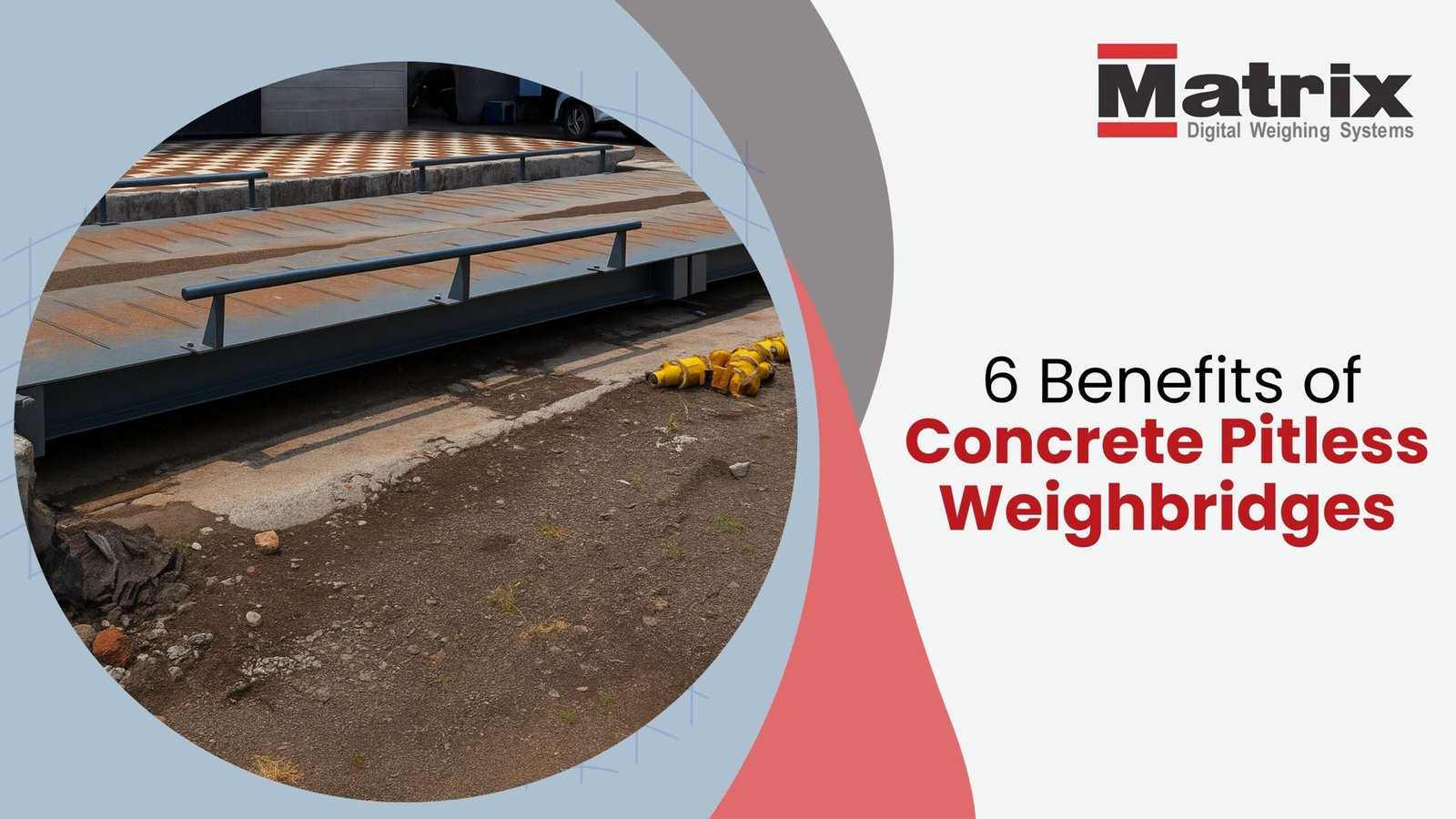
Concrete pitless weighbridges mount directly onto prepared surface foundations. You skip excavation crews, drainage specialists, and pit construction entirely. Installation teams pour the RCC foundation, install modular ramps, and position the platform in days rather than weeks.
Steel platforms require similar foundation work but take longer to fabricate and assemble on-site. Concrete reduces labor intensity because fewer specialized trades participate in the installation process.
Streamlined Project Timelines
Installation completes in three to seven days for most concrete pitless systems. While concrete requires curing time before calibration, the elimination of excavation work shortens overall project duration compared to pit-type installations.
This speed matters when operations can’t pause for extended construction periods. Facilities resume weighing operations faster, reducing revenue loss during installation downtime.
Benefit 2: Superior Durability and Longevity
Extended Operational Lifespan
Here’s the uncomfortable truth about steel platforms: they degrade faster under continuous heavy loads. Steel decks last 15-20 years with proper maintenance. Concrete platforms deliver 20-30 year lifespans in identical operating conditions.
Concrete’s four-times-greater mass resists structural fatigue better than steel. The rigid monolithic construction doesn’t flex under axle loads, preventing the micro-fractures that accumulate in steel frames over years of use.
Resistance to Surface Wear and Corrosion
Concrete platforms don’t rust. Steel requires periodic repainting, anti-corrosion treatments, and protective coatings to prevent oxidation in humid or coastal environments. These maintenance cycles add recurring costs and operational interruptions.
Concrete shows surface wear gradually but maintains structural integrity without chemical treatments. The material resists environmental degradation from rain, temperature swings, and chemical exposure better than unprotected steel.
Benefit 3: Reduced Maintenance and Upkeep Costs
Minimal Component Replacement
Steel platforms vibrate and rattle when heavy vehicles approach. This movement loosens nuts, bolts, and connection points over time, requiring periodic tightening and hardware replacement.
Concrete’s monolithic structure eliminates this vibration-induced degradation. The rigid deck transfers loads to load cells without flexing, reducing stress on mechanical fasteners and support components.
No Repainting or Surface Treatment
Steel weighbridges demand repainting every few years to prevent rust. This process requires cleaning, surface preparation, coating application, and curing time—during which the weighbridge sits idle.
Concrete requires no surface treatment. You eliminate paint costs, labor expenses, and downtime associated with protective coating maintenance. The material’s natural durability cuts long-term ownership costs significantly.
Waterlogging Prevention
Pitless designs prevent water accumulation entirely. The elevated platform drains naturally, and concrete doesn’t corrode when exposed to moisture. This combination eliminates the drainage maintenance, pit cleaning, and water damage repairs that plague pit-type installations.
Benefit 4: Enhanced Load Distribution and Performance
Even Stress Distribution Across Platform
Concrete’s thickness allows axle loads to spread more evenly across the weighbridge surface. This distribution reduces point stress on individual load cells and support structures.
Steel decks experience pin-point loading under heavy axles. Concentrated stress creates “cupping”—localized deformation that leads to platform failure and measurement inaccuracy over time. Concrete’s rigidity prevents this degradation pattern.
Better Vehicle Traction
Concrete’s textured surface provides superior grip in wet or icy conditions compared to smooth steel platforms. Vehicles maintain traction when driving onto and off the weighbridge, reducing skidding and safety incidents.
This traction advantage matters during monsoon seasons when slippery platforms create accident risks and operational delays.
Resistance to Longitudinal Forces
Concrete’s heavy mass resists the longitudinal forces created when vehicle drive wheels accelerate on the platform. Steel decks shift slightly under these forces, affecting measurement accuracy and platform alignment.
The rigid concrete structure maintains position and calibration stability despite repeated vehicle movements and acceleration events.
Benefit 5: Operational Flexibility and Future-Proofing
Modular Foundation for Easy Relocation
Concrete pitless weighbridges use transportable RCC foundation blocks. This modular construction allows disassembly and relocation to temporary or evolving sites without demolishing permanent foundations.
The reusable foundation components reduce relocation costs when business needs change or facilities expand to new locations.
Capacity Enhancement Without Major Reconstruction
You can increase weighbridge capacity by upgrading load cells without replacing the concrete platform itself. The heavy-duty construction supports higher weight ratings with minimal additional investment.
Steel platforms sometimes require structural reinforcement or complete replacement when capacity needs increase, driving up expansion costs.
Adaptability to Site Conditions
Concrete pitless systems work in locations where excavation is impractical—rocky soil, high water tables, underground utilities, or temporary installations. The elevated design adapts to challenging site conditions that restrict pit-type installations.
Benefit 6: Safety and Environmental Advantages
Elimination of Pit-Related Hazards
Pitless designs remove confined space entry risks. Maintenance technicians access all components above ground without descending into pits where oxygen levels, flooding, or structural collapse create safety concerns.
This ground-level accessibility improves worker safety during routine inspections and emergency repairs.
Reduced Civil Work and Site Disruption
Concrete pitless installations minimize environmental impact. No excavation means less soil removal, reduced drainage infrastructure, and smaller construction footprints.
Sites near sensitive areas or existing operations benefit from the reduced noise, dust, and traffic disruption during installation.
Uninterrupted Operation in Adverse Weather
The elevated platform prevents water accumulation that floods pit-type weighbridges during heavy rains. Operations continue without weather-related shutdowns or drainage system failures.
Summary Table: Concrete Pitless Weighbridge Benefits at a Glance
| Benefit | Concrete Pitless Advantage |
| Installation | 3-7 days setup; no excavation needed |
| Lifespan | 20-30 years vs. 15-20 for steel |
| Maintenance | No repainting, rusting, or waterlogging |
| Load handling | Even distribution prevents cupping |
| Flexibility | Modular foundation enables relocation |
| Safety | No pit hazards; elevated component access |
How to Decide if Concrete Pitless Is Right for Your Project
Evaluate these factors before committing:
- Site constraints: Rocky soil or high water tables favor pitless design
- Budget priorities: Lower material costs offset longer curing time
- Long-term planning: Permanent installations benefit from 20-30 year lifespan
- Maintenance capacity: Small teams benefit from reduced upkeep requirements
- Weather patterns: Monsoon-prone regions avoid waterlogging issues
- Relocation potential: Temporary or evolving sites need modular flexibility
Frequently Asked Questions
How much cheaper is concrete compared to steel platforms?
Concrete material costs run approximately 40% lower than steel for equivalent load capacity. However, concrete requires longer curing time before calibration, which may extend project timelines slightly.
Can concrete weighbridges handle the same load capacity as steel?
Yes. Concrete platforms support identical weight ratings when built to specification. The thicker concrete deck actually distributes loads more evenly, reducing stress on individual components and extending platform life.
What happens if the concrete deck cracks?
Surface cracks don’t immediately compromise weighing accuracy or structural integrity. Concrete maintains strength despite minor surface wear. However, significant structural cracks require repair, though they occur far less frequently than steel fatigue failures.
How does concrete perform in extreme temperatures?
Concrete remains stable across wide temperature ranges. Unlike steel, which expands and contracts significantly with heat fluctuations, concrete’s thermal properties maintain dimensional stability and calibration accuracy.
Is maintenance really that much easier?
Concrete platforms require maintenance checks every 1-2 years compared to 6-12 months for steel. You eliminate repainting, anti-corrosion treatments, bolt tightening, and pit cleaning—cutting labor costs and downtime substantially.
Can I relocate a concrete pitless weighbridge later?
Yes. The modular RCC foundation blocks disassemble and transport to new sites. While concrete platforms are heavier than steel, the transportable foundation design supports relocation when business needs change.
Conclusion
Concrete pitless weighbridges deliver measurable advantages in installation speed, operational lifespan, maintenance costs, and safety performance. The material’s superior durability and load distribution mechanics justify the initial investment through reduced long-term ownership expenses. Evaluate your site conditions, budget priorities, and operational timeline to determine if concrete pitless design matches your requirements.
Contact us today to discuss your weighbridge project and receive a customized solution assessment.
Matrix Weighbridge engineers concrete pitless weighing systems designed for Indian industrial environments—from monsoon-prone regions to high-traffic logistics hubs. We handle complete site evaluation, foundation design, installation, calibration, and ongoing support to ensure accurate, reliable operations for decades. Our concrete platforms deliver the 20-30 year lifespan and minimal maintenance that reduce your total cost of ownership while maintaining measurement precision under the heaviest loads. Visit matrixweighbridge.com or call us for a detailed technical consultation and project quotation tailored to your exact site conditions and operational requirements.