How to Select the Right Pitless Weighbridges for Heavy Vehicles: A Buyer’s Guide
Selecting a weighbridge for heavy vehicles involves more than checking price tags and delivery timelines. Most buyers focus on capacity ratings but overlook critical factors like platform length for multi-axle trucks, ramp angles that affect vehicle clearance, and load cell positioning that determines accuracy under uneven loads. The wrong choice leads to costly retrofits, frequent recalibration, and operational bottlenecks.
This guide walks you through vehicle assessment, structural specifications, site conditions, installation requirements, maintenance considerations, compliance standards, and vendor evaluation. By the end, you’ll know exactly what specifications to demand and which features protect your investment.
Understand Your Vehicle Types and Weighing Needs
Assessing Vehicle Dimensions and Weight Capacities
Start by documenting your heaviest vehicles and their fully loaded weights. Standard single-axle trucks require 30-40 ton capacity, while multi-axle trailers and mining vehicles demand 80-120 ton ratings.
Platform length matters more than most buyers realize. A 6-meter platform works for light commercial vehicles, but multi-axle trucks need 12-18 meter platforms to distribute weight across all load cells simultaneously.
Heavy-Duty Vehicles vs. Standard Trucks
Heavy-duty applications face unique challenges. Mining trucks, loaded cement mixers, and multi-trailer configurations create dynamic loading patterns that stress load cells differently than standard delivery trucks.
Count your daily weigh-ins. Operations exceeding 50 vehicles per day need reinforced platforms rated at 150% of maximum capacity to handle continuous stress. High-traffic environments accelerate wear on ramps and platform surfaces, requiring heavier gauge steel or reinforced concrete construction.
Consider Structural and Design Features
Platform Size and Ramp Design
Ramp angle directly affects vehicle approach speed and safety. Standard pitless weighbridges use 10-15 foot approach ramps to achieve gradual inclines that prevent undercarriage damage.
Platform width ranges from 3 to 3.5 meters. Wider platforms (3.4-3.5m) accommodate construction vehicles and agricultural equipment with oversized tire configurations.
Material Choice: Steel vs. Concrete Platforms
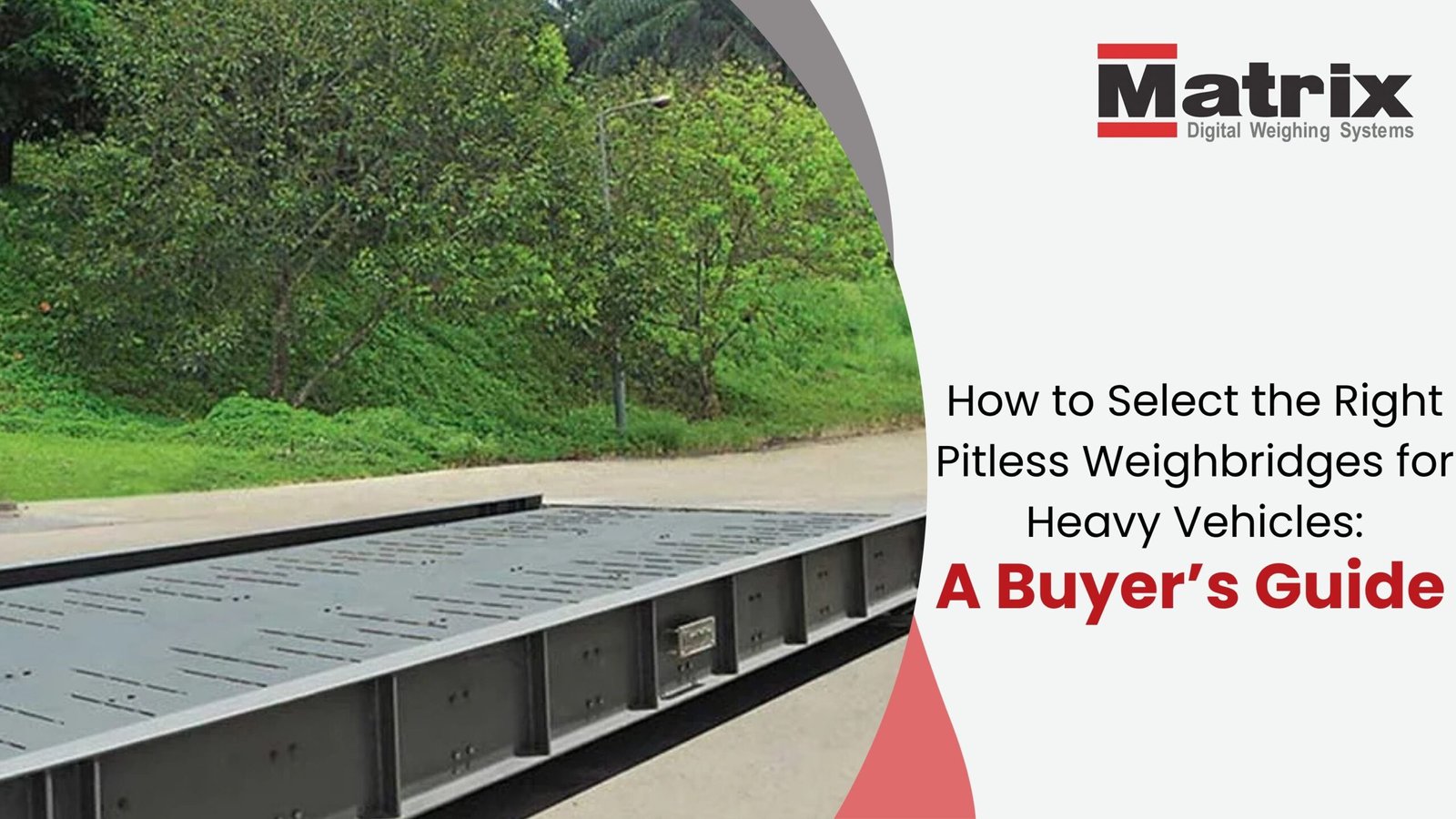
Steel platforms offer faster installation and lower upfront costs. Mild steel decks with 8-20mm plate thickness handle capacities up to 120 tons while remaining portable for future relocation.
Concrete platforms deliver superior durability in high-traffic environments. Reinforced concrete withstands repetitive heavy loads better than steel and requires less frequent surface maintenance. The tradeoff: concrete platforms take longer to install and cannot be relocated easily.
Load Cell Quality and Positioning
Digital load cells with IP68 or IP69K ratings resist moisture and dust intrusion in harsh industrial environments. These sealed units deliver consistent accuracy even when exposed to weather extremes.
Load cell count impacts measurement precision. Platforms up to 9 meters use 6 load cells, while longer platforms require 8 load cells to capture weight distribution across multiple axles. Proper calibration according to OIML Class III standards ensures legal compliance for commercial transactions.
Site Conditions and Space Availability
Ground Stability and Soil Conditions
Pitless weighbridges excel in locations where excavation poses problems. Sites with rocky terrain, underground utilities, or high water tables avoid costly pit construction by choosing above-ground installations.
Foundation requirements are straightforward: a level, reinforced concrete base capable of supporting the platform weight plus maximum vehicle load.
Available Space for Ramps and Approach Lanes
Calculate total footprint by adding platform length plus 20-30 feet for approach and exit ramps. A 12-meter platform needs approximately 50-55 feet of linear space for safe vehicle access.
Traffic flow patterns determine ramp placement. Single-direction operations use linear configurations with entry and exit on opposite ends. Bidirectional traffic requires additional maneuvering space around the platform.
Flood and Water Drainage Considerations
Pitless designs eliminate waterlogging problems that plague pit-type systems. All components sit above ground level, protecting load cells and junction boxes from monsoon flooding.
Surface drainage around the platform prevents water accumulation under ramps and approach areas. Simple grading directs runoff away from the foundation.
Installation Timeline and Budget Implications
Civil Work Requirements
Pitless installation takes 3-7 days from foundation preparation to platform commissioning. This timeline assumes pre-fabricated platforms and prepared concrete foundations.
Site preparation involves leveling, concrete pouring, and curing time. Work with contractors who understand weighbridge-specific foundation requirements including reinforcement depth and load distribution specs.
Cost Savings from Pitless Designs
Pitless systems cost 20-35% less initially compared to pit-type alternatives. The savings come from eliminated excavation, simplified foundations, and reduced labor hours.
Here’s what you avoid:
- Excavation and earthwork expenses
- Pit construction and waterproofing
- Drainage system installation
- Extended project timelines
Balancing Upfront Costs with Maintenance Savings
Calculate total cost of ownership over 10 years rather than focusing solely on purchase price. Pitless weighbridges deliver ongoing savings through reduced maintenance requirements and easier component access.
Factor in calibration costs, load cell replacement cycles, and platform resurfacing needs based on your projected traffic volume.
Maintenance and Durability Factors
Load Cell Accessibility and Protection
Above-ground installation gives technicians easy access to load cells, junction boxes, and cabling without entering confined spaces. This accessibility cuts maintenance time by 40-60% compared to pit-type systems.
Digital load cells with built-in diagnostics alert you to drift or malfunction before accuracy degrades. This predictive capability prevents costly downtime from unexpected failures.
Wear and Tear in Heavy-Traffic Environments
Platform surface degradation accelerates with traffic volume. Steel decks show wear faster than concrete in operations exceeding 100 vehicles daily.
Ramp edges take the most abuse from repeated vehicle impacts. Reinforced ramp construction with protective edging extends service life in high-volume facilities.
Maintenance Schedules and Service Support
Establish quarterly inspection routines covering load cell function, indicator calibration, and platform structural integrity. Heavy-duty operations may require monthly checks.
Keep calibration certificates current. Legal metrology compliance demands documented calibration schedules that prove measurement accuracy for commercial transactions.
Safety, Compliance, and Technological Integration
Compliance with Weight Regulations and Standards
OIML Class III accuracy ratings satisfy legal requirements for commercial weighing operations. Verify that load cells, indicators, and calibration procedures meet these standards before purchase.
Overload protection prevents damage from vehicles exceeding rated capacity. Systems rated for 150% safe overload protect investment while allowing occasional heavy vehicles.
Integration with Digital Monitoring and Automation
Modern weighbridges connect to enterprise resource planning (ERP) systems for automated data capture and inventory management. Look for systems offering RS-232, RS-485, or Ethernet connectivity.
Remote monitoring capabilities let you track weighing operations from office locations. Cloud-based dashboards provide real-time visibility into vehicle traffic, load patterns, and system diagnostics.
Safety Features for Heavy Vehicle Weighing
Traffic control systems using sensors and indicators guide vehicle positioning for accurate measurements. Automated systems reduce operator involvement and minimize positioning errors.
Anti-slip platform surfaces prevent vehicle movement during wet conditions. Textured steel or grooved concrete improves traction for safe operations in all weather.
Vendor Selection and After-Sales Support
Importance of Reputed Manufacturers and Suppliers
Choose vendors with documented heavy-vehicle installation experience. Ask for reference sites with similar vehicle types and traffic volumes.
Quality certifications matter. ISO-certified manufacturers follow consistent production standards that ensure component reliability and system longevity.
Customization Options and Scalability
Platform dimensions should match your specific vehicle fleet. Custom sizes between standard configurations optimize space usage and measurement accuracy.
Modular designs allow future capacity upgrades or platform extensions as operations grow. Discuss expansion options during initial specification.
Warranty, Training, and Support Services
Comprehensive warranties covering load cells, platforms, and electronics for 2-3 years protect against manufacturing defects. Extended service contracts provide ongoing calibration and maintenance support.
Operator training ensures proper vehicle positioning and system operation. Request on-site training as part of the installation package.
Frequently Asked Questions
What platform length do I need for multi-axle trucks?
Multi-axle vehicles require platforms long enough to position all axles on the weighing surface simultaneously. Standard 18-wheeler trucks need 12-15 meter platforms, while specialized heavy haulers may require 18-20 meter configurations.
Can I relocate a pitless weighbridge to a different site later?
Yes. Steel-deck pitless weighbridges can be dismantled, transported, and reinstalled at new locations with proper foundation preparation. Concrete platforms are more challenging to move but still possible with specialized equipment.
How often does a heavy-duty weighbridge need recalibration?
High-traffic operations (100+ vehicles daily) should schedule quarterly calibrations. Moderate-use facilities can extend to biannual calibration while maintaining accuracy. Legal metrology requirements may mandate specific intervals regardless of usage.
What’s the difference between 40-ton and 80-ton capacity weighbridges?
Capacity determines maximum safe vehicle weight. 40-ton systems suit standard delivery trucks and light commercial vehicles. 80-ton capacity handles fully loaded multi-axle trailers, mining equipment, and heavy construction vehicles. Choosing undersized capacity risks structural damage and measurement inaccuracy.
Do pitless weighbridges require special permits or approvals?
Requirements vary by location. Most jurisdictions require fewer approvals for pitless installations since they avoid deep excavation. Check local building codes and weight measurement regulations before proceeding.
Take the Next Step
Selecting the right pitless weighbridge for heavy vehicles comes down to matching specifications to your actual operational needs. Platform size, material choice, load cell quality, site conditions, and vendor support all impact long-term performance and total ownership costs.
Don’t compromise on specifications to save upfront costs. The wrong system creates ongoing headaches through frequent breakdowns, inaccurate measurements, and expensive retrofits.
Matrix Weighbridge specializes in precision-engineered pitless weighbridge solutions designed specifically for heavy vehicle operations in Indian industrial environments. Our systems combine robust steel or concrete platforms, high-accuracy digital load cells, and modular designs that adapt to your changing requirements.
We conduct comprehensive site assessments to recommend the optimal configuration for your vehicle fleet, traffic volume, and space constraints. Our engineering team handles foundation specifications, platform customization, installation supervision, and post-installation calibration to ensure flawless operation from day one.
Schedule your free site assessment and receive a detailed specification proposal. Our technical experts will evaluate your heavy vehicle requirements and design a weighbridge system that delivers accurate measurements, minimal maintenance, and lasting durability. Visit matrixweighbridge.com or contact our team today to start your project.