Modular Weighbridge Systems: Flexibility, Cost, and Maintenance Insights
Traditional weighbridge installations lock you into permanent configurations that can’t adapt when operations change. Expanding capacity, relocating to new sites, or adjusting platform length requires starting from scratch with costly reconstruction. Modular weighbridge systems solve this problem through prefabricated sections that assemble quickly, relocate easily, and scale as your business grows. This guide explains how modular design works, the flexibility advantages over conventional systems, true installation and lifecycle costs, structural performance under heavy loads, maintenance requirements specific to modular platforms, calibration practices, technology integration, and supplier selection criteria. You’ll understand exactly how modular systems deliver operational adaptability while controlling long-term expenses.
What Is a Modular Weighbridge System?
Basic Design and How It Works
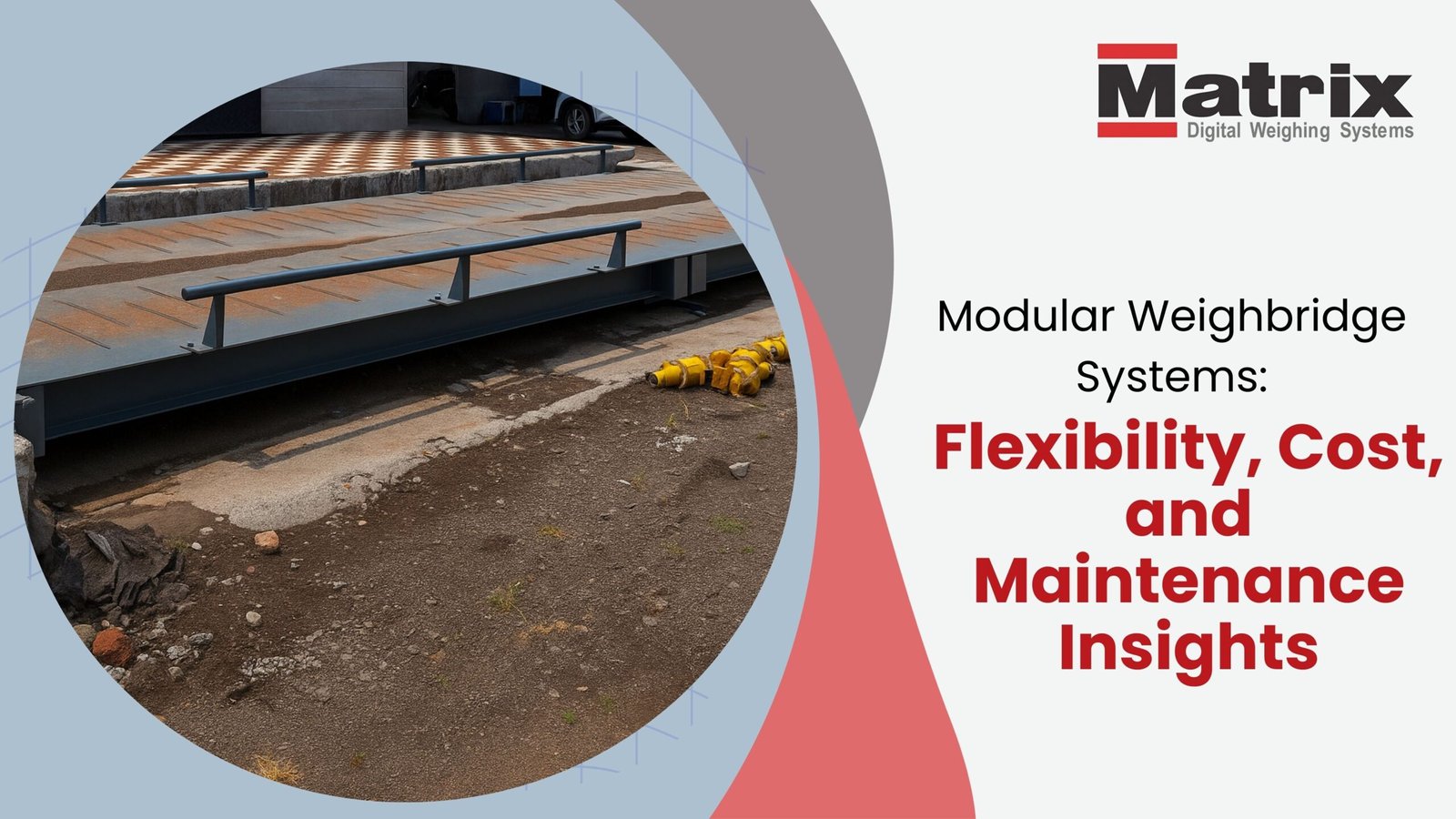
Modular weighbridges use prefabricated sections that bolt together to form the complete weighing platform. Each module contains integrated load cell mounting points and arrives factory-assembled for rapid installation.
Standard modules measure 3-6 meters in length. You combine multiple sections to achieve desired platform lengths from 6 meters up to 24 meters or more.
Load cells mount between modules and the foundation, distributing weight measurement across the entire platform length. Junction boxes connect all load cells to a central digital indicator.
Modular vs Conventional Weighbridges
Conventional weighbridges arrive as single-piece platforms or require extensive on-site welding and assembly. Transportation limits single-piece platforms to shorter lengths.
Modular systems ship in manageable sections that fit standard transport vehicles. This approach eliminates specialized hauling costs and enables installation in locations with difficult access.
The key difference: modular platforms disassemble for relocation or reconfiguration. Conventional systems become permanent fixtures that can’t adapt to changing needs.
Flexibility and Scalability Benefits
Modular Sections and Length Adjustability
Start with a shorter platform and add sections later as vehicle types change or traffic volume increases. This staged investment approach matches capital expenditure to actual operational growth.
Remove sections to shorten platforms when relocating to sites with space constraints. The same equipment adapts to multiple facility layouts throughout its service life.
Relocation, Expansion, and Temporary Installations
Mining operations, construction projects, and seasonal facilities need weighing systems that move with the work. Modular weighbridges disassemble in 1-2 days and reinstall at new locations within a week.
Temporary installations for project sites avoid the waste of permanent infrastructure that becomes obsolete when work concludes. You recover the full equipment value by relocating rather than abandoning fixed installations.
Adapting to Changing Vehicle Mix and Site Layouts
Fleet changes drive weighbridge obsolescence faster than equipment wear. When you shift from standard trucks to multi-axle trailers, platform length becomes inadequate.
Modular systems accommodate these transitions through simple section additions. Conventional platforms require complete replacement to handle new vehicle configurations.
Cost Factors You Should Consider
Civil Work Savings and Foundation Options
Modular weighbridges install on pitless foundations that eliminate excavation costs. The foundation requirements remain simpler than conventional systems since modules distribute loads predictably.
Foundation preparation for modular systems takes 3-5 days versus 3-6 weeks for conventional pit-type installations. Labor costs drop by 40-50% during the civil work phase.
Installation Time and Downtime Reduction
Module assembly and load cell installation complete in 2-4 days after foundation preparation. Compare this to 2-3 weeks for conventional systems requiring extensive on-site fabrication.
Faster installation means earlier operational revenue. For high-volume facilities, each day of delayed commissioning represents significant lost income from unmeasured vehicle traffic.
Transport, Relocation, and Lifecycle Cost Patterns
Here’s what modular design costs over 10-15 years:
- Initial purchase: Comparable to or slightly higher than conventional systems
- Installation: 30-40% lower due to reduced labor and shorter timelines
- Relocation: Possible at 15-20% of new system cost versus 100% replacement for conventional
- Expansion: Add capacity for 25-35% less than installing a second complete system
- Disposal: Modular sections retain resale value; conventional systems become scrap metal
The total cost of ownership favors modular systems when you factor in operational flexibility and adaptation potential.
Structural Design and Load Performance
Platform Construction and Module Strength
Steel modules use 8-20mm plate thickness depending on capacity ratings. Cross-bracing within each section prevents flexing under uneven loads.
Module connection points use high-tensile bolts that maintain structural integrity while allowing disassembly. These connections must be inspected quarterly in high-traffic environments.
Load Cell Configuration and Accuracy
Standard configurations place load cells at module junction points. A 12-meter platform using 6-meter modules requires 6-8 load cells for accurate weight distribution measurement.
Digital load cells with IP68 ratings resist moisture and dust penetration. Modular systems protect these components through sealed housings accessible from the platform underside.
Handling Heavy-Duty and High-Traffic Operations
Modular weighbridges handle capacities from 30 tons to 120+ tons depending on module gauge and load cell specifications. They perform identically to conventional platforms under normal operating conditions.
High-traffic facilities (150+ vehicles daily) need reinforced module connections to handle repetitive stress. Specify heavy-duty connection hardware during initial purchase for extended service life.
Maintenance Requirements and Best Practices
Routine Cleaning and Visual Inspections
Daily cleaning removes debris from module connection seams where dirt accumulates and causes binding. Pay attention to expansion gaps between sections that allow thermal movement.
Weekly inspections focus on connection bolt tension. Vibration from vehicle traffic gradually loosens fasteners, affecting platform stability and measurement accuracy.
Protecting Load Cells, Cables, and Steelwork
Load cells in modular systems remain accessible for inspection and replacement without platform disassembly. Check cable routing quarterly to ensure cables don’t chafe against module edges.
Apply rust-inhibiting coatings to connection points annually. These high-stress areas show corrosion first due to paint damage from assembly and disassembly cycles.
Preventing Corrosion, Warping, and Rattling
Module connection points require special attention in coastal or humid environments. Water trapped in seams accelerates rust formation that weakens structural integrity.
Rattling indicates loose connection bolts or worn mounting points. Address these issues immediately since continued operation with loose connections damages module edges and load cell mounting surfaces.
Long-Term Accuracy and Calibration
Calibration Frequency for Modular Systems
Modular weighbridges need calibration at the same intervals as conventional systems: annually for standard use, semi-annually for high-traffic operations.
Recalibration becomes mandatory after module additions or platform relocation. The new configuration changes weight distribution patterns across load cells.
Common Causes of Accuracy Drift
Module settlement creates accuracy problems when individual sections sink at different rates. This issue appears primarily in locations with poor soil compaction under foundations.
Connection point binding from debris or corrosion prevents free platform movement during thermal expansion. The resulting stress throws off zero balance and creates measurement errors.
Documentation, Legal Metrology, and Compliance
Maintain detailed records showing platform configuration including module count, serial numbers, and connection dates. These records prove calibration validity after modifications.
Legal metrology authorities require recertification whenever platform length changes through module additions or removals. Budget for inspection fees during expansion planning.
Technology, Data, and Remote Monitoring
Digital Indicators, Connectivity, and Software
Modern modular weighbridges integrate with enterprise software through RS-232, RS-485, or Ethernet connections. Data flows directly into inventory management and billing systems.
Wireless load cells eliminate cable routing challenges in modular designs. These battery-powered units communicate weight readings via radio frequency, simplifying module reconfiguration.
Remote Diagnostics and Predictive Maintenance
Connected weighbridges report load cell drift, voltage irregularities, and accuracy variance before failures occur. Remote monitoring reduces service calls by 30-40% through predictive intervention.
Track connection bolt tension through load cell signal analysis. Asymmetric load distribution patterns indicate loose connections requiring tightening before accuracy degrades.
Using Data to Optimize Operations and Reduce Costs
Historical weighing data reveals peak traffic periods and average vehicle types. Use these patterns to optimize platform length during module reconfigurations.
Cost-per-weighment analysis identifies maintenance expenses relative to throughput. High maintenance costs per transaction signal the need for component upgrades or replacement.
Choosing the Right Modular Weighbridge Partner
What to Look for in a Supplier
Verify that modules use standardized connection systems compatible with future additions. Proprietary connection designs lock you into single-source purchasing for expansions.
Ask for documented relocation cases including timelines and costs. Suppliers experienced in modular installations provide realistic expectations for disassembly and reinstallation.
Customization, Upgrades, and Future-Proofing
Platform width, module length, and capacity ratings should match your specific vehicle fleet. Standard configurations often work, but custom specifications optimize performance for specialized applications.
Upgrade pathways matter for long-term value. Can you retrofit wireless load cells later? Does the indicator support software updates for new connectivity standards?
Frequently Asked Questions
Q: Can modular weighbridges handle the same weight as conventional systems?
A: Yes. Modular weighbridges support capacities from 30 to 120+ tons depending on specifications. Properly engineered modular platforms perform identically to conventional weighbridges under equivalent load conditions.
Q: How many times can I relocate a modular weighbridge before it wears out?
A: Quality modular systems handle 3-5 relocations over their 15-20 year service life without significant degradation. Connection points show wear first, but these components can be replaced during maintenance cycles.
Q: Do modular weighbridges cost more than conventional systems initially?
A: Initial equipment costs run comparable or 5-15% higher than conventional weighbridges. However, installation costs are 30-40% lower due to faster setup, which often makes total project cost lower for modular systems.
Q: Will adding modules later affect calibration of the existing platform?
A: Yes. Platform length changes require complete recalibration since weight distribution across load cells changes. Budget for professional calibration services whenever you add or remove modules from the system.
Q: Can I mix modules from different manufacturers during expansion?
A: Generally no. Module connection systems, load cell specifications, and structural designs vary between manufacturers. Stick with your original supplier for expansions to ensure compatibility and maintain warranty coverage.
Build the Weighing System That Grows With You
Modular weighbridge systems deliver flexibility that conventional platforms can’t match. The ability to relocate, expand, and reconfigure protects your investment against operational changes that make fixed installations obsolete.
Choose modular design when you value adaptability, faster installation, and lifecycle cost control over the limitations of permanent infrastructure.
Matrix Weighbridge specializes in precision-engineered modular weighbridge solutions designed for Indian industrial conditions. Our factory-fabricated modules use heavy-duty connection systems that withstand repeated assembly cycles while maintaining structural integrity and measurement accuracy.
We provide complete flexibility through standardized module designs that accommodate future expansions and relocations. Our engineering team assesses your current needs and future growth plans to recommend optimal module configurations that deliver long-term value.
From initial site assessment through installation, calibration, and ongoing maintenance support, we guide you through every phase of modular weighbridge ownership. Our service network ensures rapid response for module additions, relocations, and technical support across India.
Request your customized modular weighbridge proposal today. Contact Matrix Weighbridge to discuss your operational requirements, site conditions, and growth plans. We’ll design a flexible weighing solution that adapts as your business evolves. Visit matrixweighbridge.com or call our technical team to schedule your free consultation now.