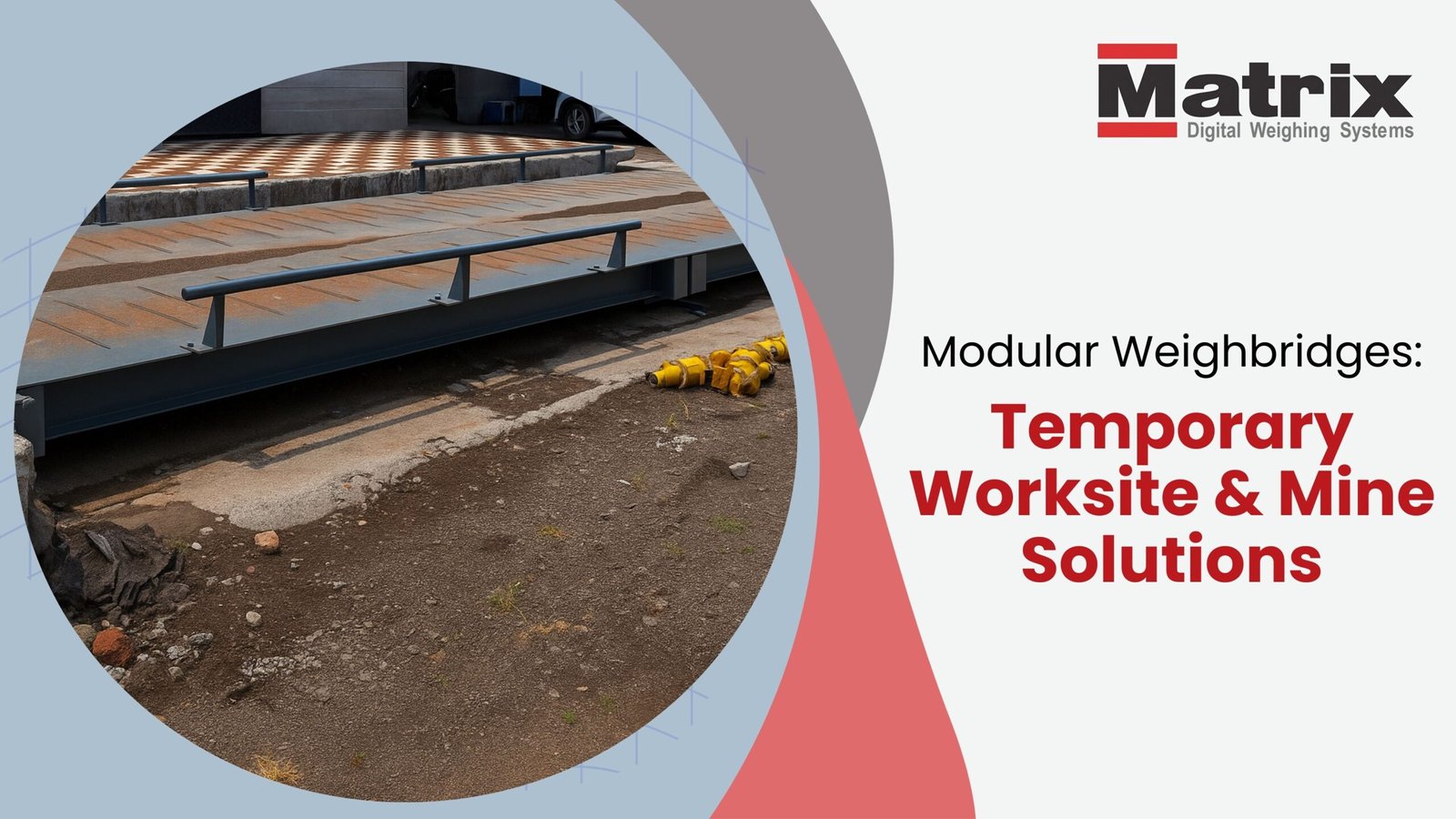
Modular Weighbridges: Temporary Worksite & Mine Solutions
Mining operations and construction projects face a persistent challenge: weighing heavy equipment and materials at sites that exist for months rather than years. Installing permanent weighbridges for temporary locations wastes capital on infrastructure you’ll abandon when projects conclude. Modular weighbridges solve this through rapid-deploy designs that install in hours, relocate between sites multiple times, and handle the punishing conditions of mining environments without permanent foundations. This guide covers what makes modular systems ideal for temporary applications, key features for harsh environments, installation procedures on difficult terrain, relocation economics, cost advantages, maintenance in dusty conditions, technology integration, and proven deployment strategies. You’ll understand exactly how modular weighbridges protect capital while delivering accurate weighing across multiple project sites.
What Makes Modular Weighbridges Ideal for Temporary Sites?
No-Foundation Design and Rapid Installation
Modular weighbridges install directly on compacted ground or temporary concrete pads without deep foundations. This eliminates the 3-6 week civil work timeline that makes permanent systems impractical for short-term projects.
Setup completes in 2-6 hours with standard tools and small crews. Compare this to traditional weighbridges requiring concrete curing, drainage installation, and specialized construction equipment.
Complete with Platform, Frame, and Ramps for Instant Setup
Systems arrive with all components pre-fabricated and tested. Platform sections, mounting frames, approach ramps, load cells, and digital indicators ship as complete kits requiring only assembly.
The integrated design means no on-site fabrication or custom modifications. Crews follow straightforward assembly procedures that don’t require specialized weighbridge installation expertise.
Key Features for Mining and Construction Applications
Heavy-Duty Steel Construction for Harsh Environments
Mining sites generate extreme stress through abrasive materials, heavy equipment impacts, and continuous operation. Modular platforms use 12-20mm steel plate construction that withstands this punishment.
Reinforced module connections handle the vibration and shock loads from loaded mining trucks traveling over rough terrain. Standard residential or commercial weighbridge specifications fail quickly under these conditions.
Capacities from 30-120 Tons for Mining Trucks and Heavy Equipment
Match capacity to your heaviest loaded vehicles. Coal and iron ore operations typically need 80-100 ton systems, while construction sites work with 40-60 ton specifications.
Overspecifying capacity by 20-30% extends service life in high-volume operations. The incremental cost pays back through reduced maintenance and fewer recalibration cycles.
Anti-Skid Surfaces and Safety for Dusty/Wet Conditions
Textured steel surfaces or diamond plate tread patterns prevent vehicle slippage during wet weather or when platforms accumulate mud and dust.
Safety rails and visual indicators guide drivers during low-visibility conditions common in mining environments. These features reduce positioning errors that compromise measurement accuracy.
Installation Process for Worksites and Mines
Site Preparation on Uneven or Remote Terrain
Level an area slightly larger than the platform footprint plus approach ramps. Total space requirements typically measure platform length plus 25-30 feet for safe vehicle access.
Compact the surface to prevent settling under load. Rocky mining sites often provide adequate stability without additional preparation, while softer construction sites need gravel or crushed stone base layers.
Step-by-Step Assembly
- Position load cell mounting pads at marked locations
- Install and level load cells using shims
- Assemble platform modules and connect sections with high-tensile bolts
- Mount approach ramps to platform ends
- Connect load cell cables to junction box and digital indicator
- Perform initial calibration and test weighing
Most installations complete within a single work shift. Experienced crews handle setup in 3-4 hours for standard configurations.
No Civil Work Requirements Even in Rocky Soil
The distributed load design works on surfaces that would challenge permanent installations. Individual load cell pads spread weight across multiple support points rather than requiring continuous foundations.
This flexibility proves critical in remote mining locations where concrete delivery and placement become logistically complex and expensive.
Relocation and Reusability Benefits
Dismantling and Transport in Standard Vehicles
Disassemble modular systems in reverse order of installation. Platform sections load onto flatbed trucks without specialized hauling equipment.
A 12-meter modular weighbridge typically ships on 2-3 standard trucks. This transportation flexibility enables deployment to sites with limited access roads common in mining operations.
Multiple Site Deployments
Quality modular weighbridges handle 3-5 full relocations over their 12-15 year service life. Each redeployment delivers value equivalent to purchasing a new permanent system at that location.
Track relocation costs carefully. Dismantling, transport, and reinstallation typically run 15-25% of new system cost, making reuse far more economical than buying dedicated weighbridges for each temporary site.
Cost Recovery Through Repeated Use Across Projects
Mining companies operating multiple quarries or construction firms managing regional projects amortize equipment costs across all locations. A single modular weighbridge serving 4 sites over 8 years costs 60-70% less than installing permanent systems at each location.
Cost Advantages Over Permanent Systems
Eliminating Foundation and Excavation Expenses
Avoid these costs entirely with modular systems:
- Site excavation and grading
- Reinforced concrete pit or foundation construction
- Drainage system installation
- Underground utility relocation
- Extended project timelines requiring site security
Lower Ownership Costs for Short-Term Projects
Projects lasting 6-36 months can’t justify permanent weighbridge investments. Modular systems deliver accurate weighing for project duration then redeploy elsewhere.
Calculate cost per month of operation. Modular weighbridges on 18-month projects cost 40-50% less per month than permanent alternatives when factoring in avoided civil work and equipment reuse value.
ROI Through Faster Deployment and Reduced Downtime
Start weighing operations within days of equipment arrival versus weeks or months for permanent systems. This speed matters when material movement begins immediately after site establishment.
Early weighing capability prevents revenue loss from unmeasured material leaving sites. Mining operations losing even 2-3 days of production data face significant financial impact.
Maintenance in Harsh Mining Environments
Quick Access to Load Cells and Components
Above-ground component placement enables rapid maintenance without confined space entry or excavation. Technicians replace failed load cells in 1-2 hours versus full-day repairs on pit-type systems.
This accessibility reduces downtime costs that often exceed repair expenses in high-volume mining operations.
Dust/Mud Cleaning Protocols for High-Traffic Sites
Clean platforms daily in dusty mining environments. Material buildup between platform and load cells creates binding that affects accuracy.
Use compressed air or soft brushes around load cells. High-pressure washing forces water into sealed components and accelerates corrosion.
Corrosion Protection for Wet and Coastal Mines
Apply rust-inhibiting coatings before deployment to corrosive environments. Coastal quarries and mines near water sources face accelerated steel degradation.
Inspect and recoat connection points after each relocation. Disassembly and transport damage protective coatings that need renewal before redeployment.
Integration with Mining Operations Technology
Software for Ore Weighing, Fraud Prevention, and Compliance
Modern mining weighbridges connect to enterprise resource planning (ERP) systems for automated inventory tracking and production monitoring.
Ticket management software prevents fraud through RFID vehicle identification and photographic documentation. These systems pay for themselves by eliminating material loss from unauthorized removal.
RFID/Automation for Truck Turnaround Optimization
Automate the weighing process to reduce cycle times and eliminate manual data entry errors. RFID tags identify vehicles automatically and trigger weighing sequences without operator intervention.
Mining operations processing 200+ trucks daily gain significant throughput improvements through automation that would be impractical with manual ticket systems.
Real-Time Data for Multi-Site Mine Management
Cloud-based platforms aggregate data from multiple temporary weighbridge locations. Mine managers track production across all sites from central offices.
Trend analysis identifies underperforming locations and optimizes truck routing between active extraction areas.
Frequently Asked Questions
Q: How accurate are modular weighbridges compared to permanent installations?
A: Identical accuracy when properly calibrated. Both use the same digital load cell technology and indicators. Accuracy depends on calibration quality, not installation type. Modern modular systems achieve OIML Class III accuracy meeting legal metrology requirements.
Q: Can I use modular weighbridges in extremely remote mining locations?
A: Yes. The minimal site preparation and no-foundation design make modular systems ideal for remote deployments. Transport challenges matter more than installation complexity in isolated locations. Systems ship in sections fitting standard trucks.
Q: What’s the maximum capacity for modular mining weighbridges?
A: Modular designs handle 120+ tons for heavy mining equipment. Capacity depends on platform gauge and load cell specifications rather than installation method. Specify capacity 20-30% above your heaviest loaded vehicle for extended service life.
Q: How do modular weighbridges perform on unstable ground?
A: Better than permanent systems in many cases. The distributed load cell design accommodates minor ground settling through individual shim adjustments. Permanent foundations crack under differential settlement requiring expensive repairs.
Q: What happens to accuracy after multiple relocations?
A: Accuracy remains stable with proper recalibration after each relocation. Quality modular systems maintain performance through 3-5 complete relocations over their service life. Inspect connection points and replace worn components during reassembly.
Deploy Weighing Where Your Projects Take You
Modular weighbridges eliminate the capital waste of permanent installations at temporary sites. The combination of rapid deployment, harsh environment durability, multiple relocation capability, and integrated technology delivers weighing solutions that move with your mining and construction operations.
Stop treating each temporary site as a unique weighing challenge. Invest in equipment that serves multiple projects over its entire service life.
Matrix Weighbridge provides heavy-duty modular weighbridge solutions engineered specifically for temporary mining sites and construction projects across India. Our systems combine reinforced steel construction, rapid-deploy designs, and proven relocation durability tested across hundreds of temporary installations.
We supply complete kits including platforms, ramps, load cells, indicators, and detailed assembly instructions. Our modular designs work on unprepared ground, rocky terrain, and remote locations where permanent installations become impractical or uneconomical.
Technical support includes site assessment to verify ground conditions, capacity recommendations based on your vehicle fleet, installation supervision for first-time deployments, and relocation planning for multi-site operations. We maintain spare parts inventory for common wear components ensuring rapid repairs don’t interrupt your production schedules.
Request your modular weighbridge specification and deployment plan. Matrix Weighbridge engineers will evaluate your temporary site requirements, project timeline, and relocation needs to recommend optimal configurations. Visit www.matrixweighbridge.com or contact our mining solutions team to discuss your temporary weighing challenges today.