Modular vs Fixed Weighbridges: Lifetime Cost of Ownership
Introduction
The purchase price tells you almost nothing about what a weighbridge actually costs. A cheaper fixed installation can become expensive through maintenance costs and downtime. An expensive modular system might pay for itself through relocation value and faster installation. Total cost of ownership includes civil work, installation time, maintenance access, downtime losses, and end-of-life flexibility.
This analysis breaks down where modular and fixed weighbridges create costs over 15-20 year operational lifespans. You’ll see specific cost drivers, maintenance realities, and decision criteria that match weighbridge type to your actual site conditions and business requirements.
Understanding the Difference
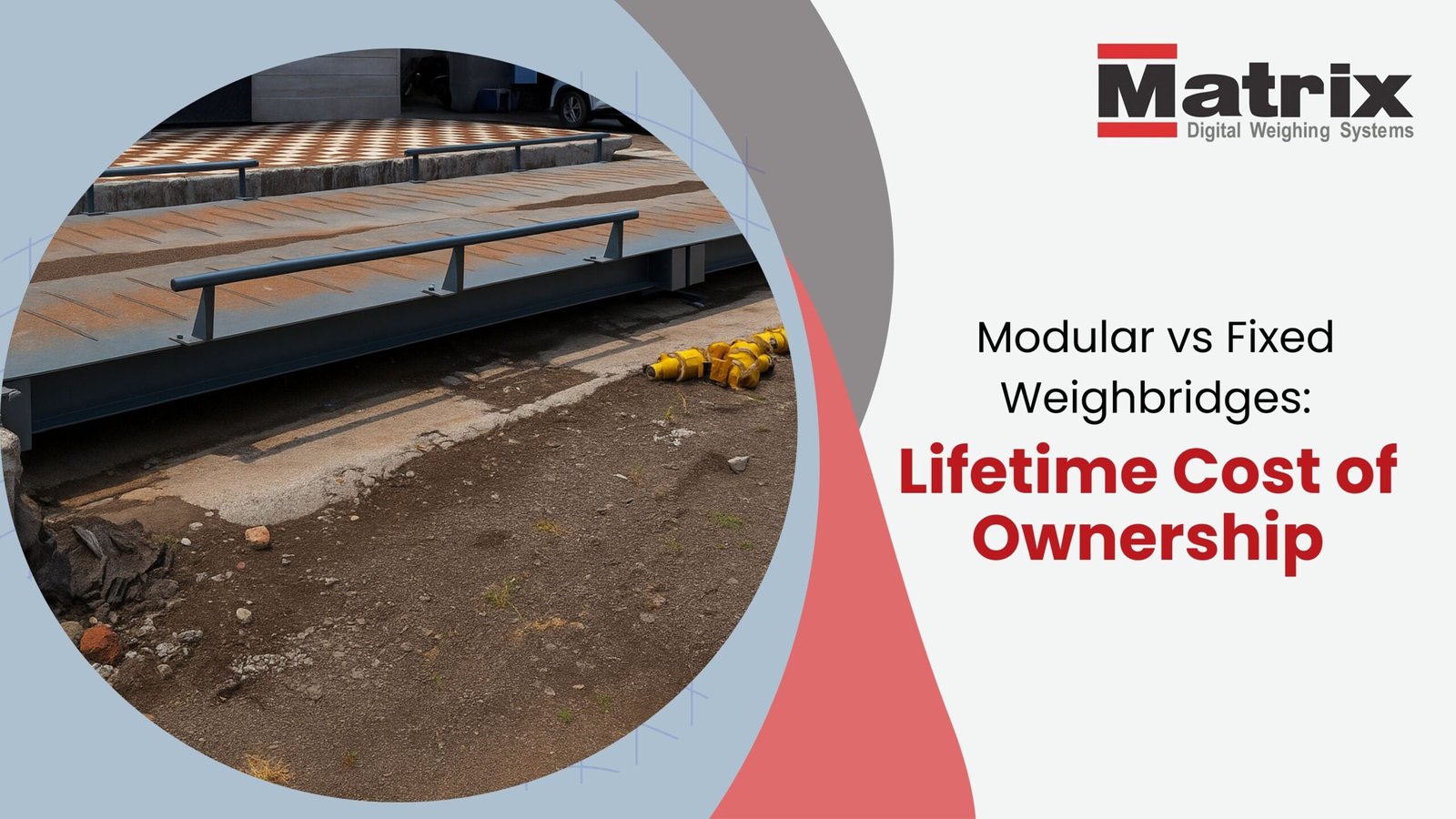
Modular weighbridges use prefabricated steel deck sections that bolt together. Load cells mount between deck modules and foundation. Individual sections can be removed for service or relocation.
Fixed weighbridges incorporate permanent concrete decks or welded steel platforms designed for long-term placement. They require substantial foundation work and can’t be relocated without complete reconstruction.
Both types work in pit or pitless configurations. The modular versus fixed distinction refers to platform construction, not installation format.
Total Cost Components
Upfront Investment
Modular systems cost 15-25% more per ton of capacity compared to fixed concrete designs. This price difference shrinks dramatically when you factor in installation speed and civil work requirements.
Fixed RCC weighbridges need extensive formwork, reinforcement placement, and concrete curing time. Labor and material costs for this work often exceed the deck price premium of modular systems.
Civil and Site Preparation
Pit installations require excavation, drainage systems, and retaining walls. Poor drainage creates maintenance nightmares—water accumulation damages load cells and corrodes structural components.
Pitless installations need approach ramps. A 60-ton weighbridge with 3-meter height requires ramps extending 15-18 meters on each side. This footprint constraint affects site layout costs.
Foundation quality determines long-term accuracy. Soil bearing capacity below 10 tons per square meter requires pile foundations. This adds significant cost regardless of weighbridge type.
Installation Time Economics
Modular weighbridges install in 3-5 days after foundation completion. Fixed concrete platforms need 14-21 days for deck construction plus curing time before load cell installation.
That time difference translates to real money. Projects with tight commissioning deadlines face penalty costs for delays. Seasonal operations can’t afford installation schedules that span critical operating periods.
Manufacturing facilities lose production revenue during weighbridge construction. Each extra week of installation represents throughput loss that doesn’t appear on the equipment invoice.
Maintenance Cost Reality
Access and Service
Modular platforms provide bolt-access to load cells and junction boxes. Technicians can reach components in 30-45 minutes. Fixed concrete decks often require breaking concrete to access failed load cells.
Load cell replacement on modular systems takes 2-4 hours. Fixed installations need 1-2 days including concrete removal and restoration. Your downtime cost multiplies this service time difference.
Corrosion and Longevity
Steel deck modular systems require periodic recoating every 8-12 years depending on the environment. This maintenance cost is predictable and manageable through planned downtime.
RCC decks avoid corrosion but develop concrete spalling and rebar exposure over time. Repair work disrupts operations and costs increase as damage spreads. Small cracks become major structural issues without intervention.
Bolted joints in modular systems need periodic torque checking. Loose connections create measurement errors before causing structural problems. Fixed welded structures show no warning before weld failures occur.
Relocation Value
Here’s the uncomfortable truth most suppliers avoid: 40% of industrial weighbridges get relocated within their first decade of operation. Facility expansions, lease expirations, and process changes drive these moves.
Modular weighbridges relocate completely. You disassemble, transport, and reinstall at the new site. Total cost runs 30-40% of original installation. The platform itself maintains full functionality.
Fixed concrete weighbridges become scrap during relocation. You’re buying a new weighbridge for the new site. That’s 100% replacement cost versus partial relocation cost.
Even if you never relocate, resale value differs dramatically. Used modular systems sell for 40-60% of replacement cost. Fixed installations have almost zero resale value beyond scrap metal pricing.
Accuracy Over Time
Foundation settlement affects both types equally, but modular systems show symptoms earlier through visible deck misalignment. Fixed concrete platforms mask settlement until accuracy degradation becomes severe.
Temperature expansion creates different stress patterns. Modular bolted joints accommodate thermal movement. Welded fixed platforms develop internal stresses that can crack concrete foundations or distort the deck.
Corner load errors increase as structures age. Modular systems allow individual section replacement to restore accuracy. Fixed platforms require complete deck replacement when structural degradation causes permanent corner errors.
Choosing Based on Application
Choose Modular When:
- Site lease terms are under 10 years
- Future expansion might require relocation
- Installation timeline is critical
- Maintenance access matters for high uptime requirements
- Phased capacity expansion is likely
Choose Fixed When:
- Site ownership is permanent with no relocation possibility
- Extremely heavy traffic creates fatigue concerns
- Initial capital cost constraints override TCO analysis
- Very high capacity (100+ tons) creates modular complexity
- Local fabrication reduces concrete deck costs significantly
FAQs
Q: How much does relocation actually cost for modular weighbridges?
A: Relocation costs include disassembly, transport, new foundation work, and recalibration. Expect 30-40% of original installation cost for moves within 200km. This beats 100% replacement cost for fixed systems.
Q: Do modular weighbridges sacrifice accuracy compared to fixed platforms?
A: No. Accuracy depends on load cell quality and foundation stability, not deck construction method. Properly installed modular systems meet the same ±0.1% accuracy standards as fixed platforms.
Q: What’s the realistic maintenance cost difference over 20 years?
A: Modular systems average 15-20% higher maintenance costs due to recoating and bolt inspection requirements. Fixed concrete systems avoid routine maintenance but create catastrophic repair costs when problems develop. Total maintenance spending equalizes, but modular costs are predictable while fixed costs arrive as surprises.
Q: Can I upgrade automation on older weighbridges?
A: Yes for both types. RFID systems, cameras, and software integrate regardless of platform construction. Modular systems make component access easier during retrofit installations.
Q: How does monsoon affect pit-type installations differently?
A: Pit weighbridges need robust drainage regardless of platform type. Water accumulation damages load cells and creates safety hazards. Pitless installations avoid drainage problems but require larger site footprints for access ramps.
Conclusion
Modular weighbridges cost more initially but deliver flexibility that protects long-term investment value. Fixed platforms minimize upfront spending but lock you into permanent placement with limited adaptation options. Calculate total ownership cost including installation speed, maintenance access, and relocation possibility rather than comparing equipment prices alone.
Matrix Weighbridge manufactures modular weighbridge systems engineered for Indian industrial conditions with full relocation capability and maintenance-friendly design. Our platforms deliver precision weighing with the flexibility to adapt as your operations evolve.
Ready to calculate total cost of ownership for your specific application? Visit matrixweighbridge.com to compare modular and fixed options, review detailed specifications, or request a site-specific TCO analysis from our engineering team today.