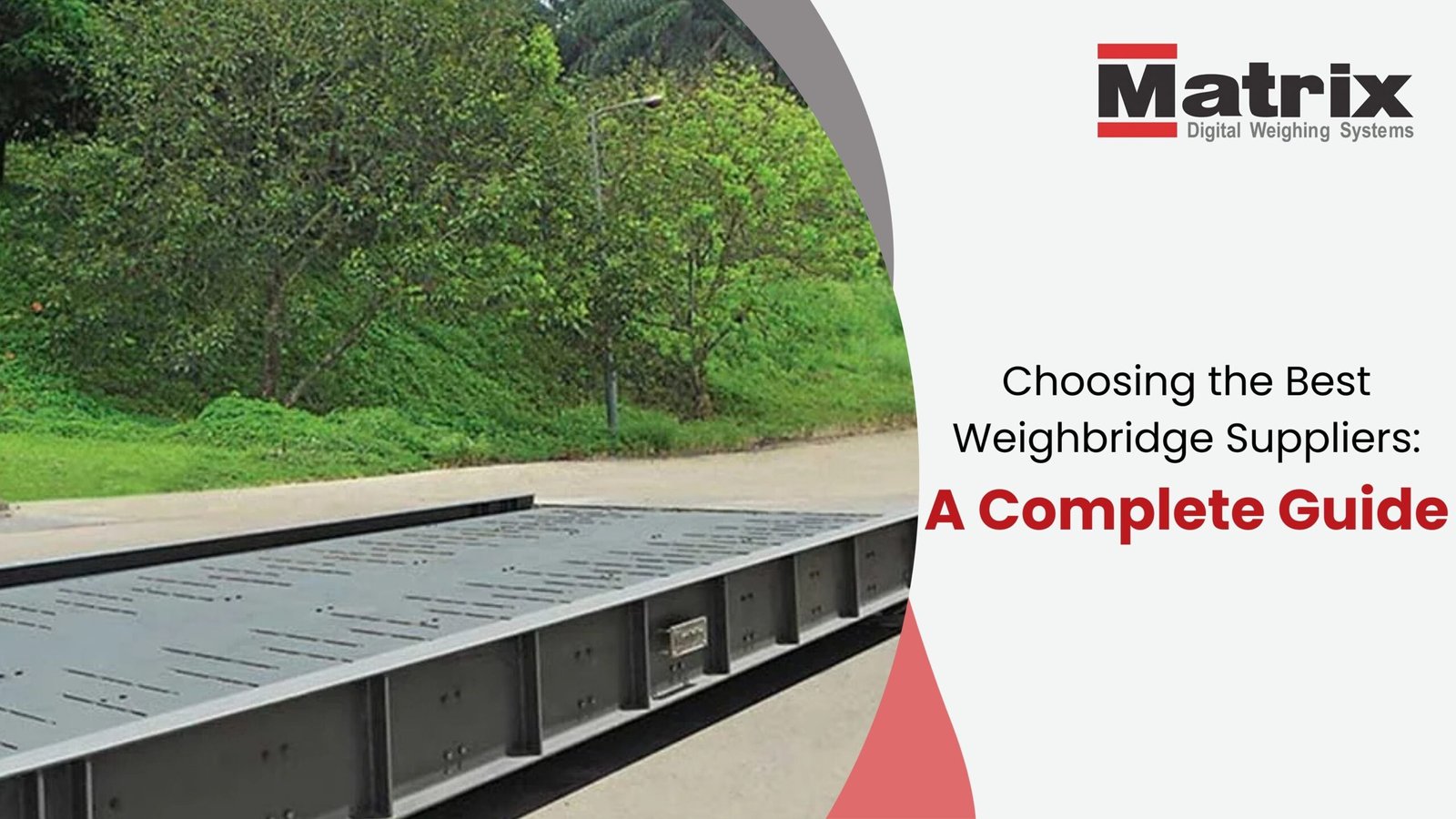
Choosing the Best Weighbridge Suppliers: A Complete Guide
Introduction
Most weighbridge buyers compare prices and get burned by suppliers who disappear after installation. The equipment works for two years, calibration drifts, load cells corrode, and the supplier’s after-sales team becomes unreachable. A weighbridge is a 10-15 year operational commitment, not a one-time purchase. Choosing the right supplier determines accuracy, compliance, and total cost-of-ownership across that entire lifecycle. This guide walks through every selection criterion in the order it actually matters—starting with requirements definition and ending with contract review red flags that separate serious suppliers from equipment vendors.
Define Your Requirements First
Before contacting suppliers, document your technical requirements precisely. Vague briefs produce generic quotes that become expensive change orders after purchase.
Capture these specifics:
- Maximum vehicle weight and axle configuration (single, tandem, tridem)
- Expected daily transaction volume and peak-hour throughput
- Platform dimensions matching your longest vehicle type
- Installation type preference: pit, pitless, or modular
- Integration requirements: ERP, TMS, gate automation, or standalone
- Site conditions: soil type, water table depth, space constraints
Suppliers who respond to detailed requirements with thoughtful configurations demonstrate competence. Suppliers who quote before asking follow-up questions are selling inventory, not solving problems.
Supplier Experience and Track Record
Industry-Specific Experience
General weighbridge experience matters less than sector-specific installations. A supplier with 50 installations in steel plants understands load cell protection from metal debris, operator workflow for coil weighing, and ERP integration patterns in manufacturing environments. That specific knowledge prevents design decisions that create problems in your application.
Ask for references from operations matching your industry, scale, and vehicle type. Then call those references. The single most revealing question: “What happened when something went wrong, and how fast did they respond?”
Installation Portfolio
Supplier age is a proxy for installation volume, but installation quality reveals more. Request site visit access to existing installations in your region. Examine platform condition, drainage design, and load cell accessibility. Systems that look maintained after five years indicate supplier build quality and customer service that extends beyond the sales process.
Certifications and Compliance Standards
ISO 9001 certification confirms documented quality management systems covering manufacturing, testing, and service delivery. It doesn’t guarantee product quality but establishes that processes exist to catch defects before systems leave the factory.
For Indian operations, verify Legal Metrology compliance under the Legal Metrology Act, 2009. Weighbridges used for commercial transactions require verification and stamping by authorized metrology departments. Suppliers must demonstrate experience navigating this process, not just supplying equipment that theoretically meets standards.
OIML Class III accuracy certification for load cells confirms measurement traceability to international standards. Request documentation rather than accepting verbal assurances.
Product Quality and Manufacturing
Materials and Construction
High-grade mild steel in I-beam configurations forms the structural backbone of durable weighbridges. Ask for steel grade specifications and welding standards used in fabrication. Hot-dip galvanizing or equivalent corrosion protection determines lifespan in moisture-exposed environments.
Load cell quality separates reliable systems from problematic ones more than any other component. Hermetically sealed load cells with IP67 or IP68 protection withstand the moisture exposure common in Indian industrial environments. Cheaper load cells with inadequate sealing fail within 2-3 monsoon seasons.
Customization Capability
Standard configurations rarely match site conditions perfectly. Foundation requirements vary by soil conditions. Platform dimensions adjust for specific vehicle types. Cable routing configurations change based on indicator room placement.
Suppliers who offer only catalogue specifications lack the engineering capability to handle non-standard requirements. This becomes a problem during installation when reality doesn’t match drawings.
After-Sales Service Structure
This criterion separates suppliers from equipment vendors more clearly than any other factor. A surprising pattern emerges across weighbridge failures: over 70% of operational problems trace back to service gaps rather than equipment defects. The hardware works—the support structure around it fails.
Evaluate these service specifics before purchasing:
- Response time guarantees for breakdown calls (4-hour vs. next-day response means different operational impact)
- AMC scope: preventive maintenance frequency, calibration inclusions, parts coverage, and exclusion clauses
- Technician locations: service engineers based in your state vs. dispatched from headquarters 800 km away
- Spare parts inventory: critical components held locally vs. sourced on demand after failure
- Calibration equipment: supplier-owned certified test weights vs. subcontracted calibration that introduces delays
Request written AMC terms before purchase. Vague commitments become disputes when breakdowns occur.
Warranty, Pricing, and Lifecycle Costs
Reading Warranty Terms
Standard weighbridge warranties run 12-24 months on structural components and 12 months on electronics. Read exclusion clauses carefully. Warranties voiding on “improper use” without defining proper use create supplier escape routes for legitimate claims.
Compare warranty coverage across suppliers on identical components. Structural warranty differences reveal manufacturer confidence in build quality.
Total Ownership Calculation
Initial purchase price represents 30-40% of total 10-year ownership costs for weighbridges. Calibration, maintenance, spare parts, and downtime losses constitute the remainder. Lowest-price suppliers often deliver highest lifetime costs through inferior components requiring frequent replacement and service teams that charge premium rates for emergency calls.
Calculate annual maintenance costs explicitly during supplier evaluation. A system costing ₹2 lakhs less upfront with ₹50,000 higher annual maintenance costs more in year three than premium alternatives.
Technology and Future Readiness
Modern weighbridge hardware should support digital load cells, computerized indicators, and standard communication protocols enabling future automation. Proprietary connections that lock software upgrades to the original supplier create dependency that inflates future technology costs.
Ask suppliers specifically how their current hardware accommodates:
- RFID or ANPR vehicle identification integration
- ERP connectivity via open APIs
- Remote diagnostics and software updates
- Expansion from basic ticketing to full automation
Suppliers who deflect these questions or claim their current generation needs no upgrades are describing obsolescence, not stability.
Supplier Evaluation Checklist
Questions for Supplier Meetings
Use these during initial conversations:
- How many installations have you completed in my industry and region?
- Can I visit two existing customer sites before purchasing?
- Where are your nearest service engineers based?
- What is your typical response time for emergency breakdowns?
- What are the explicit exclusions in your warranty?
- How do you handle calibration certification for Legal Metrology compliance?
- What does your AMC cover, and what costs extra?
Contract Review Points
Before signing, verify:
- Delivery and installation timelines with penalty clauses for delays
- Calibration responsibility and documentation process
- Spare parts pricing commitments for 5-year period
- AMC renewal terms and maximum escalation rates
- Jurisdiction for dispute resolution
Common Questions
Is the cheapest weighbridge quote always a red flag?
Not always, but it requires deeper investigation. Ask what the supplier omitted to reach that price. Common cost-cutting areas include lower steel grades, unprotected load cells, and no local service capacity. Request itemized quotes that specify steel grade, load cell model, and service provisions for valid comparisons.
How do I verify a supplier’s service capability before purchasing?
Ask for the names of three existing customers within 200 km of your site and call them. Ask specifically about breakdown response times, calibration process, and AMC adherence. Customers describing prompt, professional service confirm real capability. Customers who hesitate or mention recurring issues reveal service gaps the supplier won’t advertise.
Can I negotiate AMC terms after equipment purchase?
Leverage disappears after purchase. Negotiate AMC scope, response time guarantees, and pricing before signing the equipment contract. Suppliers motivated to close equipment sales will incorporate reasonable service commitments when asked before purchase, not after.
What certifications should I insist on in writing?
ISO 9001 for quality management, Legal Metrology registration for commercial weighing compliance, and load cell calibration certificates traceable to national standards. Request physical document copies, not claims that documentation exists.
Conclusion
Weighbridge supplier selection determines operational accuracy, compliance reliability, and service experience for the next decade. Evaluate suppliers on service infrastructure and track record as rigorously as equipment specifications. Request site visits, written AMC terms, and reference checks before committing to any purchase.
Matrix Weighbridge delivers complete weighbridge solutions backed by engineering expertise, documented quality standards, and service infrastructure built for Indian industrial conditions. Our systems meet Legal Metrology compliance requirements, use certified load cell components, and include AMC programs with defined response commitments covering installation, calibration, and ongoing maintenance. We provide detailed technical proposals, reference customers in your industry, and transparent lifecycle cost breakdowns that make supplier comparison straightforward. Visit matrixweighbridge.com to request a comprehensive technical proposal with full AMC terms, or call to arrange reference customer introductions and site visits before you decide.