Pitless vs Pit-Type Weighbridge: Which One to Choose?

Introduction
You need a weighbridge that fits your site, budget, and operational flow. But choosing between pitless and pit-type designs feels like guessing in the dark. One requires excavation and drainage planning. The other demands ramp space and elevation adjustments. Both claim accuracy, durability, and long-term value.
This guide breaks down the real differences—installation timelines, maintenance access, space trade-offs, and hidden costs—so you can match the right system to your actual constraints.
We’ll cover structure, performance, costs, and decision factors that matter when heavy vehicles roll onto your platform every day.
What is a Pit-Type Weighbridge?
A pit-type weighbridge sits flush with the ground after excavation work creates a foundation pit. Vehicles drive straight onto the platform without climbing ramps. The weighing deck remains at road level, and load cells sit below the surface in the pit structure.
This design requires civil work—digging, drainage installation, and concrete foundation building. Once installed, it becomes a permanent fixture. The pit protects internal components from wind and external movement but demands regular cleaning to prevent water accumulation and debris buildup.
What is a Pitless Weighbridge?
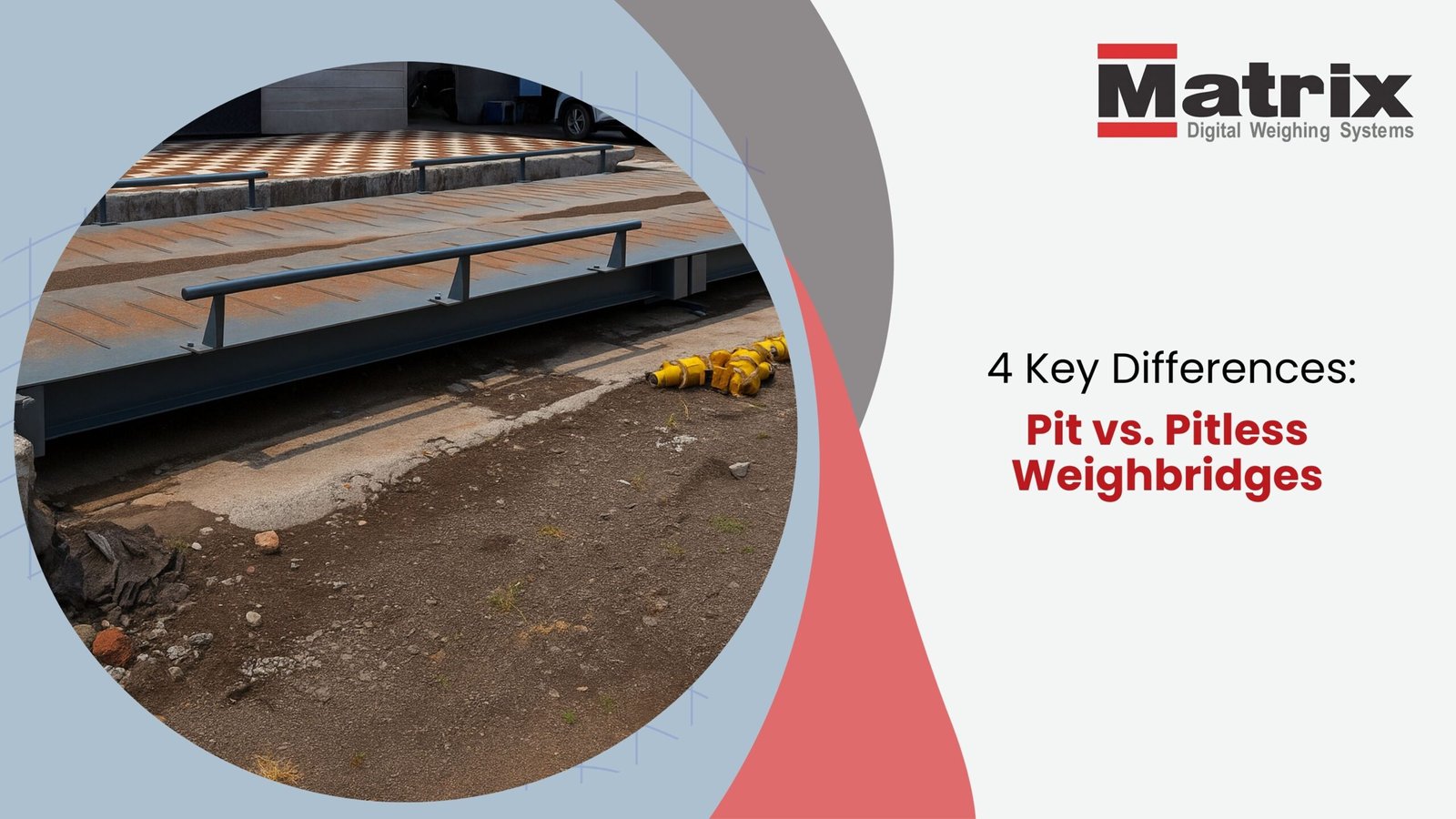
A pitless weighbridge mounts above ground level on a concrete foundation. No excavation is needed. Instead, ramps on both sides allow vehicles to drive up, weigh, and exit.
The platform and all components sit exposed above the surface. Installation is faster because you skip the digging phase. The modular design allows relocation if your site changes. All parts—load cells, junction boxes, and sensors—remain accessible for quick repairs and inspections.
Core Differences Between the Two Designs
Installation Process and Timeline
Pit-type weighbridges need excavation crews, drainage experts, and concrete specialists. The process takes several days or weeks depending on soil conditions and weather. Civil work drives up labor and material costs before the weighbridge itself arrives.
Pitless systems install in a fraction of that time. You prepare a flat surface, lay the foundation, and mount the platform. No digging means fewer workers, less downtime, and faster commissioning.
Space Requirements and Site Layout
Pitless weighbridges consume more linear space because ramps extend the footprint. The ramps create approach and exit zones that stretch beyond the platform itself. This layout works if you have open yard space but restricts tight sites.
Pit-type models sit flush with the ground, preserving yard flow. Vehicles access from multiple angles without ramp constraints. This ground-level design integrates into existing traffic patterns and saves space in crowded facilities.
Maintenance Access and Load Cell Protection
Pitless weighbridges offer easy access to every component. Load cells, wiring, and sensors sit above ground where technicians can inspect, clean, and replace parts without climbing into confined spaces. Water drains naturally away from the structure.
Pit-type systems bury components below the surface. Water accumulation, debris, and corrosion become recurring maintenance challenges. Cleaning the pit and accessing submerged load cells requires more effort and specialized tools.
Comparative Analysis: Feature-by-Feature
Accuracy and Performance
Pit-type weighbridges deliver stable, consistent readings because the underground installation shields sensors from wind, temperature swings, and vibration. The controlled environment reduces measurement variation.
Pitless models face more environmental exposure, but modern designs with calibrated load cells still provide reliable accuracy. Temperature fluctuations and foundation movement can affect precision slightly, though regular calibration mitigates this.
Durability and Longevity
Pitless weighbridges last longer when properly maintained. Above-ground components avoid moisture damage, and the open design prevents water-related corrosion. Load cells stay dry and functional for extended periods.
Pit-type systems suffer from water logging during monsoons. Corrosion accelerates when drainage systems fail. Submerged steel components degrade faster than their exposed counterparts.
Installation Cost vs. Operating Cost
Pit-type weighbridges have higher upfront installation costs due to excavation, drainage, and civil construction. However, they integrate seamlessly into existing roads without ramps.
Pitless models cost less initially because you skip excavation. But ramp construction and elevated foundations add expenses. Long-term maintenance costs stay lower due to easier access.
Flexibility and Relocation
Pitless weighbridges relocate easily. The modular design allows disassembly, transport, and reinstallation at new sites. Businesses with temporary needs or evolving layouts benefit from this mobility.
Pit-type systems lock into one location permanently. Moving them requires filling the old pit and excavating a new one—an expensive, time-consuming process.
Water Logging and Drainage Challenges
Pitless weighbridges avoid water logging entirely. Rainwater and spillage drain off the elevated platform naturally.
Pit-type models struggle with water accumulation. Drainage systems clog over time. Flooded pits damage load cells, corrode wiring, and disrupt operations during heavy rains.
Which Weighbridge Suits Your Requirements?
Choose a pit-type weighbridge if you have ample space, need permanent installation, want ground-level vehicle access, and can manage regular pit cleaning. This works for large logistics hubs and high-traffic weighing operations where site relocation isn’t a factor.
Choose a pitless weighbridge if you need faster installation, easier maintenance, relocation flexibility, or operate in flood-prone areas. This suits businesses with limited excavation budgets, temporary sites, or facilities that expand over time.
Decision Factors to Evaluate
- Soil conditions: Rocky or waterlogged soil makes excavation difficult and expensive
- Budget constraints: Limited capital favors pitless for lower installation costs
- Maintenance capacity: Small teams benefit from above-ground component access
- Site permanence: Temporary or evolving operations need relocatable systems
- Traffic patterns: Multi-directional flow suits pit-type; linear flow suits pitless
Frequently Asked Questions
Can pitless weighbridges handle the same load capacity as pit-type models?
Yes. Both designs support identical load capacities when built to the same specifications. Load capacity depends on platform strength and load cell ratings, not installation type.
How long does installation take for each type?
Pitless weighbridges install in 3-7 days depending on site preparation. Pit-type models require 2-4 weeks due to excavation, drainage installation, and concrete curing time.
Which design offers better accuracy?
Pit-type weighbridges provide slightly more stable readings due to their sheltered, underground position. However, properly calibrated pitless systems deliver accuracy within acceptable commercial tolerances for most industries.
What happens during heavy rains?
Pitless weighbridges drain naturally and continue operating. Pit-type models risk water accumulation in the pit, which can damage load cells and disrupt weighing if drainage systems fail.
Can I relocate a pit-type weighbridge later?
Relocation is technically possible but impractical. You must fill the existing pit, excavate a new one at the destination, and reinstall from scratch. Pitless systems move far more easily.
Conclusion
Your weighbridge choice hinges on site conditions, budget, and operational flexibility. Pit-type designs work for permanent, high-traffic locations with good drainage. Pitless systems win when you need speed, maintenance ease, or future mobility. Evaluate your space, soil, and long-term plans before committing.
Get expert guidance on the right weighbridge for your facility. Contact us today for a site assessment.
Matrix Weighbridge delivers customized weighing solutions engineered for Indian industrial conditions. We handle site evaluation, installation, calibration, and after-sales support to keep your operations running smoothly. Whether you need a pitless system for quick deployment or a pit-type platform for permanent heavy-duty use, we build weighbridges that match your exact requirements. Visit matrixweighbridge.com or call us to discuss your project and receive a detailed quotation.